Roll Up
You peel your spine off the mat one section at a time until you are sitting up, then roll back down the same way. It builds deep abdominal strength and teaches your back to bend smoothly instead of in one stiff block.
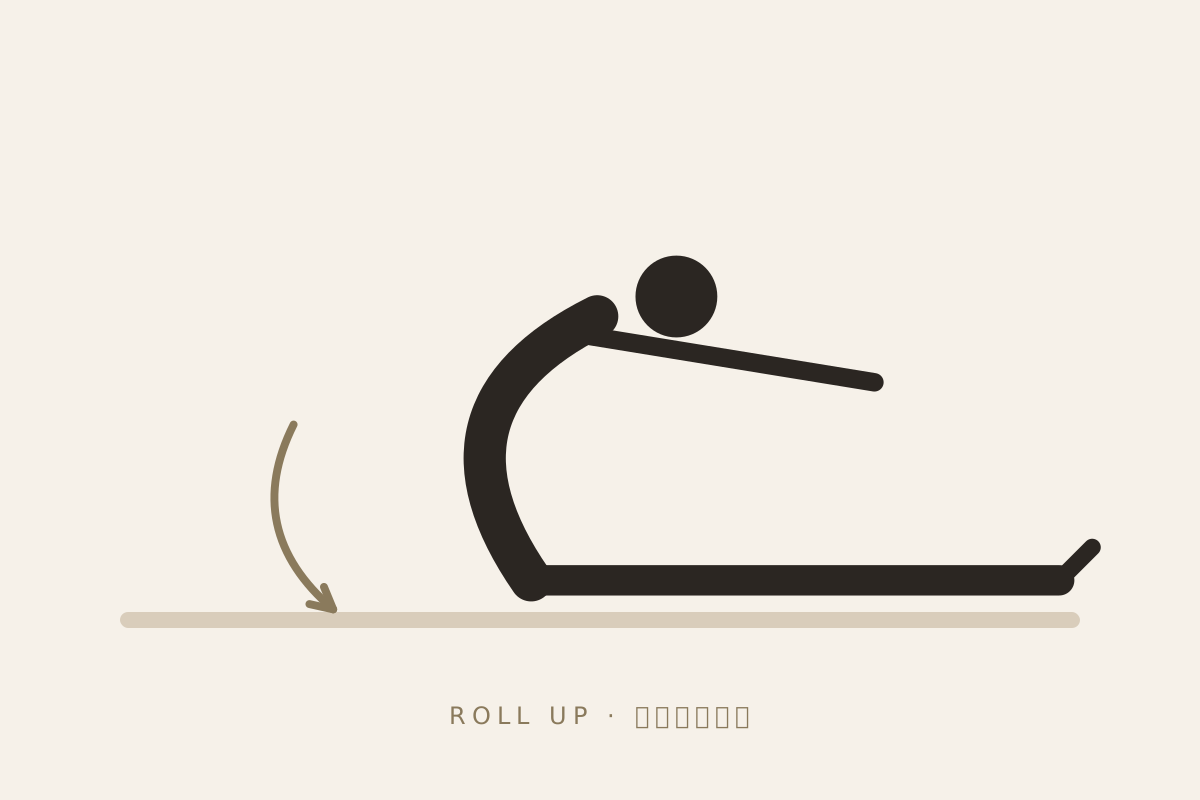
Illustration. Kiki's own photos are coming soon.
What it works
- Deep abdominal muscles
- Control of the spine, one segment at a time
- Stretch along the back of the body
- Coordinating breath with movement
Starting position
Lie on your back with your legs long and together, or a little apart if that feels steadier. Reach your arms up toward the ceiling, directly over your shoulders. Let your shoulders settle down away from your ears and keep your ribs soft rather than flared.
How to do it
- Breathe in and nod your chin gently toward your chest, keeping your arms reaching forward.
- Breathe out and curl your head, then your shoulders, then your upper back off the mat, drawing your belly in toward your spine.
- Keep rolling up until you are sitting, then reach forward over your legs in a long C-shaped curve.
- Breathe in and start to roll back by tucking your tailbone under, so your lower back touches the mat first.
- Breathe out and lower the rest of your spine one section at a time, finishing with your head and arms back where you started.
Breathing
Breathe in to prepare, breathe out as you curl up; breathe in to start rolling back, breathe out to finish.
How many
3–5 slow reps
Teaching cues
- Move like a wheel rolling, not a plank lifting.
- Scoop your belly in so your back can round.
- Slow down in the part that feels hardest.
Common mistakes
Make it easier
Start seated with knees bent and hands behind your thighs. Roll back only halfway, then return to sitting (a roll-down). Add range as it gets easier.
Make it harder
Start with your arms overhead on the mat, keep your legs straight and together, and slow the whole movement down so no part of it relies on speed.
Before you start
This exercise rounds the spine deeply. If you have osteoporosis or low bone density, skip it: bone-health guidance advises avoiding repeated or end-range forward bending of the spine. Skip it too if you have a recent disc injury or forward bending brings on back pain, and stop if it strains your neck. During pregnancy it involves lying on your back and strong abdominal effort, so ask your provider first. Check with your doctor or physical therapist if you have any back, neck or bone condition before trying it.
This page is general guidance for healthy adults, not medical advice. Stop if anything hurts, and check with your doctor or physical therapist if you have an injury, a medical condition, or are pregnant or postpartum.
Questions
Why can't I do a Roll Up without my feet lifting?
It is common, especially if your hamstrings are tight or your abdominals are still building strength. Bend your knees, hold your thighs, and practice rolling down halfway first. Many people need weeks of this before the full version.
Is the Roll Up the same as a sit-up?
No. A sit-up often lifts the trunk in one stiff piece using speed. The Roll Up moves the spine one section at a time, slowly, with the breath. It still bends the spine forward, so the same cautions about bone density and back injuries apply.
Try next
Sources
Want feedback on your form?
Practice at home works best with a teacher checking your form. Join the Friday mat class in Point Loma, or book a one-on-one online session with Kiki.