Spine Stretch Forward
Sitting tall with your legs in front of you, you curl forward one section of the spine at a time and then stack back up. It stretches your back and the backs of your legs and helps you find a tall sitting posture.
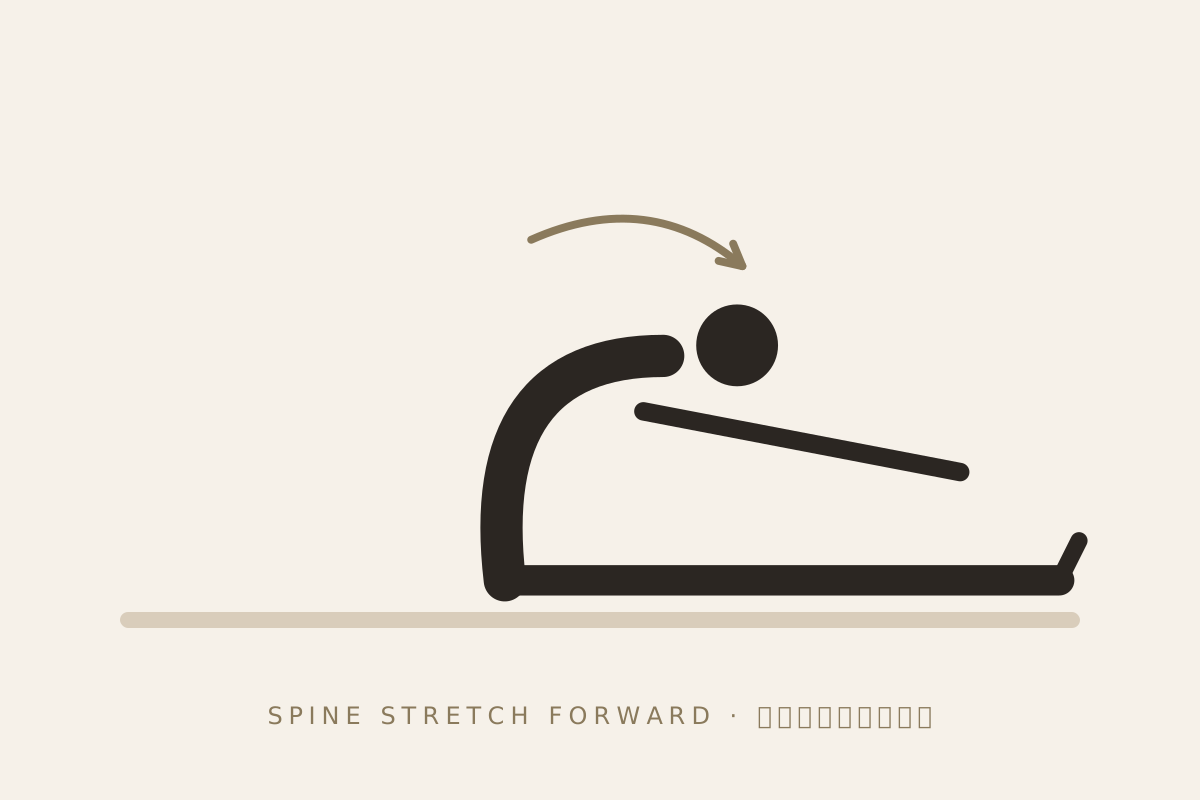
Illustration. Kiki's own photos are coming soon.
What it works
- Flexibility of the back and hamstrings
- Spinal articulation (bending one section at a time)
- Abdominal support while stretching
- Tall seated posture
Starting position
Sit up tall on your sit bones with your legs straight in front of you, a little wider than your hips, toes pointing up. Reach your arms forward at shoulder height. If your lower back rounds or your knees strain, sit on a folded towel or cushion and bend your knees slightly.
How to do it
- Breathe in and grow taller through the top of your head.
- Breathe out and nod your chin, then curl your head, neck and upper back forward, drawing your belly in as your arms reach ahead.
- Keep curling until you feel a stretch along your back, keeping your hips still and your weight even on both sit bones.
- Breathe in and hold the curve.
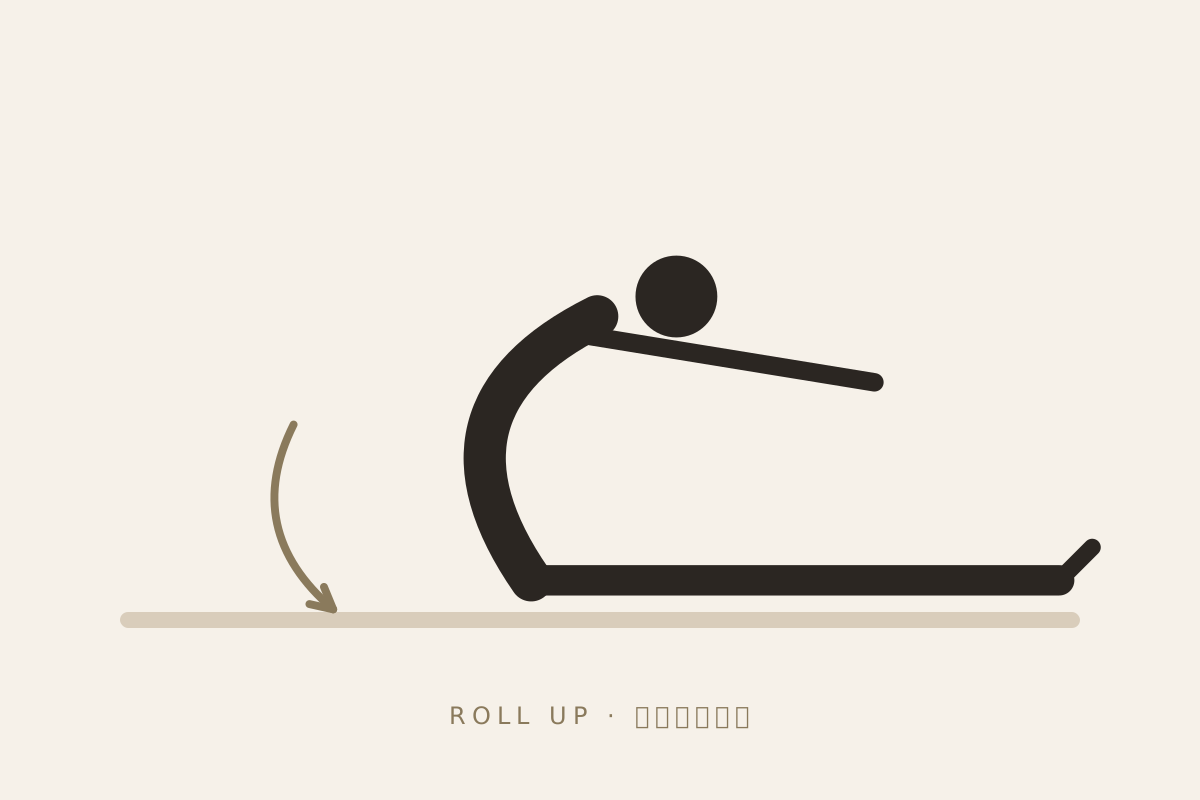
- Breathe out and roll back up from the lower back first, stacking one section on top of the next until your head arrives last.
Breathing
Breathe in to sit tall, breathe out to curl forward; breathe in to hold, breathe out to stack back up.
How many
4–6 slow reps
Teaching cues
- Curl up and over, as if over a big beach ball.
- Your hips stay planted; only your spine moves.
- Come up like stacking blocks, bottom to top.
Common mistakes
Make it easier
Sit on a cushion with your knees bent and feet flat, rest your hands on the mat in front of you, and curl only a little way forward.
Make it harder
Sit on the floor without a cushion, keep your legs straight, and take a slower count on the way up so each part of the spine is felt.
Before you start
This is a forward-bending stretch of the spine. If you have osteoporosis or low bone density, don't curl; bone-health guidance advises avoiding repeated or end-range forward bending. Instead, sit tall and reach your arms forward only as far as your back stays long, or skip it. If forward bending triggers back pain or leg symptoms such as tingling, stop. During pregnancy it is done sitting, but a growing belly limits how far you can curl, so keep it gentle. Check with your doctor or physical therapist if you have a back condition.
This page is general guidance for healthy adults, not medical advice. Stop if anything hurts, and check with your doctor or physical therapist if you have an injury, a medical condition, or are pregnant or postpartum.
Questions
I can't sit up straight with my legs out. What should I do?
Tight hamstrings tip the pelvis backward, which makes sitting tall hard. Sit on a folded towel or cushion and bend your knees. That one change often makes the exercise feel completely different.
Does Pilates help lower back pain?
A 2015 Cochrane review found low- to moderate-quality evidence that Pilates reduces pain and disability compared with doing little or nothing, but no conclusive evidence that it beats other forms of exercise. If you have back pain, a physical therapist can tell you which exercises suit you.
Try next
Sources
Want feedback on your form?
Practice at home works best with a teacher checking your form. Join the Friday mat class in Point Loma, or book a one-on-one online session with Kiki.