Swimming
You reach one arm and the opposite leg long while your middle stays steady, first on hands and knees, later lying face-down. It builds the muscles along your back and hips that help you stand and sit tall.
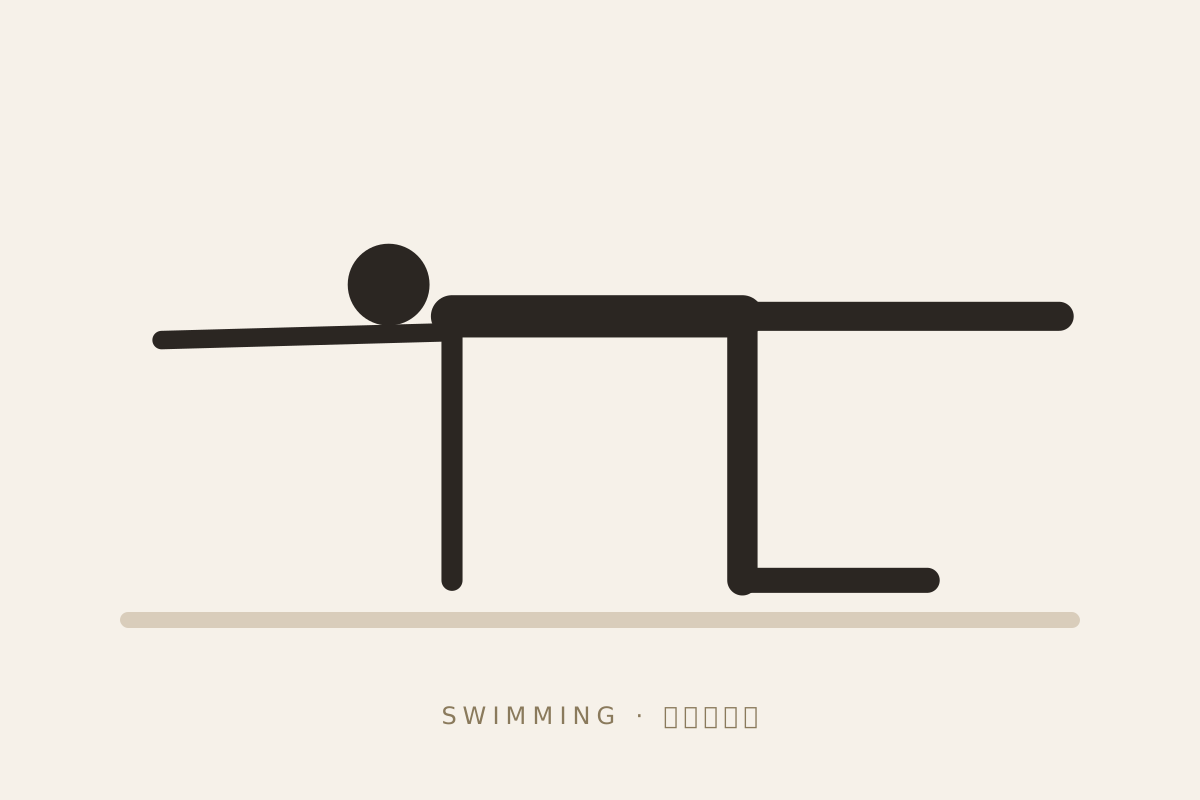
Illustration. Kiki's own photos are coming soon.
What it works
- Back muscles along the spine
- Glutes (buttock muscles)
- Deep abdominals that keep the trunk steady
- Shoulder blade control
Starting position
Beginner version: come onto hands and knees on your mat. Hands sit under your shoulders, knees under your hips, about hip-width apart. Your back is long and flat, keeping its natural gentle curves, and your eyes look at the mat just ahead of your hands so your neck stays in line with your spine.
How to do it
- Breathe in to prepare. Gently draw your belly in toward your spine, as if zipping up snug pants.
- Breathe out and slide one leg straight back along the mat, then lift it only to hip height. Keep both hip bones facing the floor.
- If that feels steady, reach the opposite arm forward at shoulder height at the same time.
- Breathe in and bring the arm and leg back down with control.
- Switch sides. When this feels easy, try the full version: lie face-down, legs long, arms reaching past your head, lift arms, chest and legs a few inches, and flutter opposite arm and leg in small, quick beats.
Breathing
Prep: breathe out as you reach, breathe in as you return. Full version: keep breathing steadily while you flutter; never hold your breath.
How many
Prep: 5 slow reps each side. Full version: 10 to 20 beats, 1 to 2 rounds.
Teaching cues
- Reach long, not high.
- Imagine a cup of tea balanced on your lower back.
- Keep the back of your neck long; look at the mat.
Common mistakes
Make it easier
Move only one limb at a time: slide a leg back with the toes staying on the mat, or reach one arm forward. Add the opposite pair only once you can stay steady.
Make it harder
Move to the face-down version and flutter arms and legs in small beats for a slow count of 10 to 20, keeping the belly lifted off the mat and the neck long.
Before you start
Stop if you feel pinching or pain in your lower back; keep the lift lower or stay with the hands-and-knees version. If you have osteoporosis, gentle back-strengthening work like this is the kind of exercise UK expert guidance encourages, but keep it smooth and within a comfortable range. During pregnancy, lying face-down usually becomes uncomfortable as the belly grows, so use the hands-and-knees version. If your wrists complain, make fists or come onto your forearms; put a folded towel under sore knees. Check with your doctor or physical therapist if you have a back or neck injury, a known spinal fracture, or pain that lasts after exercise. If you are pregnant, follow your ob-gyn's advice.
This page is general guidance for healthy adults, not medical advice. Stop if anything hurts, and check with your doctor or physical therapist if you have an injury, a medical condition, or are pregnant or postpartum.
Questions
Is the hands-and-knees version the same as a bird dog?
It looks very similar. In Pilates, the focus is on reaching long through the arm and leg while the trunk stays still, which prepares you for the face-down Swimming.
Why do I feel it in my lower back instead of my glutes?
Usually the leg is lifting too high and the back is arching to help. Lower the leg, lengthen it back along the mat first, and gently squeeze the buttock of the moving leg.
Try next
Sources
- STOTT PILATES Matwork exercise guide (Merrithew) — Swimming Prep, Spine Twist, Cat Stretch
- Balanced Body, The Core: the classical Pilates mat sequence (Swimming, Side Kick Series)
- Brooke-Wavell et al. 2022, "Strong, steady and straight": UK consensus on physical activity and exercise for osteoporosis (full text)
- ACOG patient FAQ: Exercise During Pregnancy
Want feedback on your form?
Practice at home works best with a teacher checking your form. Join the Friday mat class in Point Loma, or book a one-on-one online session with Kiki.